Gustav Mahler (1860 – 1911)
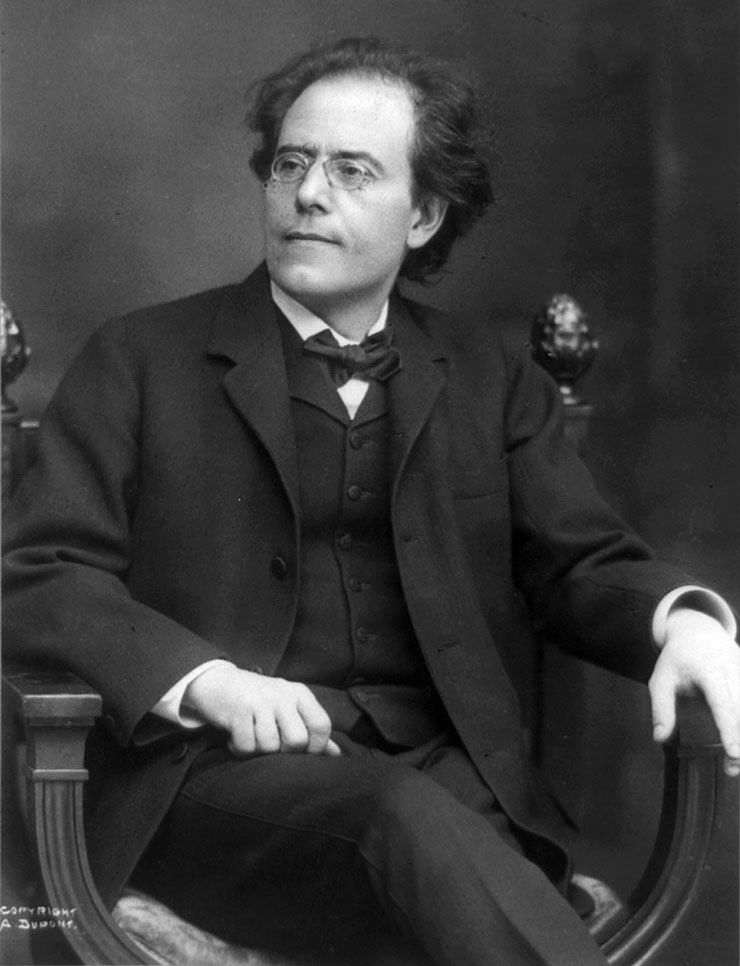
Gustav Mahler, New York, 1909
This page links to short essays and also lists more extended writings on various aspects of Gustav Mahler’s life and music.
On this website
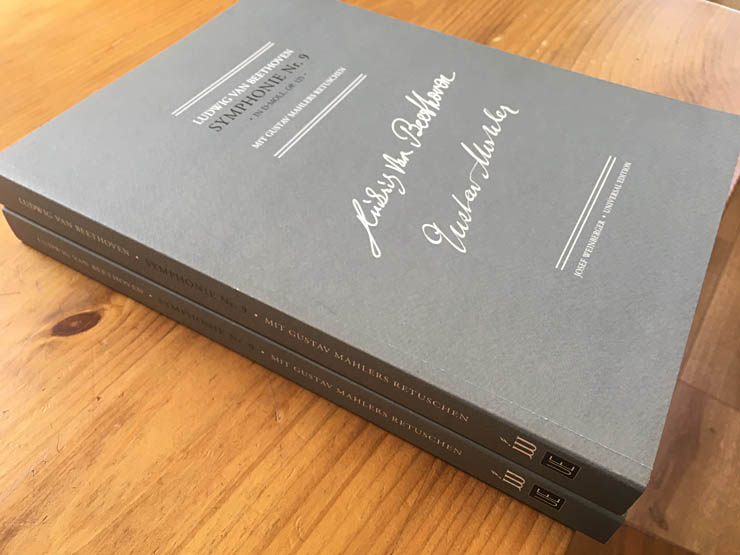
The Edition of Beethoven’s Ninth Symphony with Mahler’s Retuschen
“Klezmer Musik” in the First Symphony
The Offstage Band in the Second Symphony
Oskar Fried’s Recording of the Second Symphony
The "Impossible" Oboe Slides in the Third Symphony
Interpreting the Beginning of Mahler’s Fourth Symphony
Orchestral Balance in Jascha Horenstein’s Mahler Recordings
The Naked Note in the Scherzo of Mahler’s Fifth Symphony
Leonard Bernstein’s
Glissandi in Mahler’s Fourth and Fifth Symphonies
Dynamic Range in the Finale of the Sixth Symphony
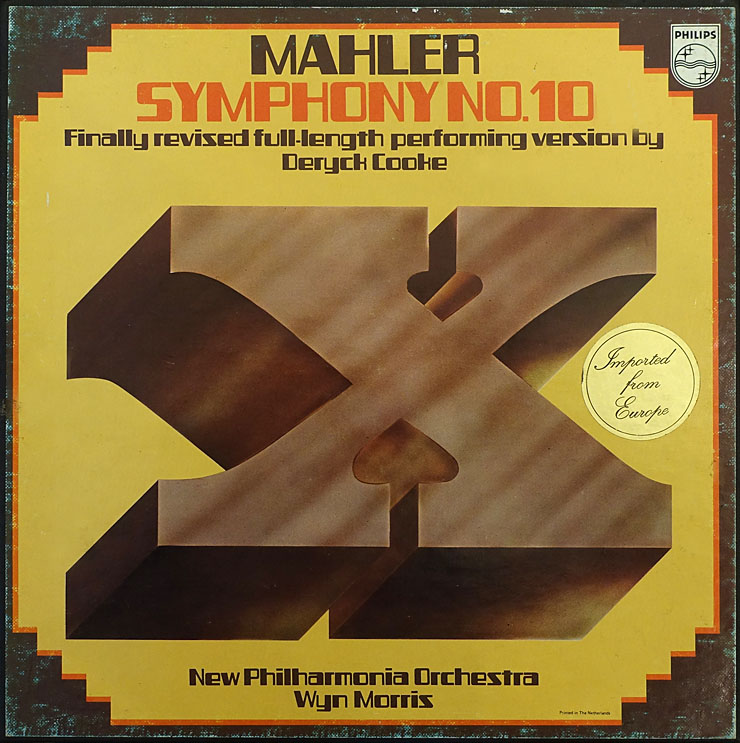
The Wyn Morris Recording of Mahler’s Tenth Symphony
On my Wordpress Blog
The Blog pages will open in a new tab.
My blog on various musical themes, including Mahler.
Channukah in Summer? (A note on Mahler’s Eighth Symphony)
Did Mahler actually say: “My time will come”?
Conference Papers on Mahler
The Search for the Written Sources of Mahler’s Retuschen, the Identification of his Copyists, and the Significance of his Changes to the Works of other Composers. Presented at the symposium: “Mahler as Interpreter; Mahler as Interpreted”, New England Conservatory, Boston, MA, 30 November, 2011
Was mir die Aufnahmen erzählen – Mahlers Orchester und Spieltechnik im Licht von frühen Aufnahmen
(What the Recordings tell me – Mahler’s Orchestras and their Playing Technique in the Light of Early Recordings) Presented at the symposium: Instrumente und Musizierpraxis zur Zeit Gustav Mahlers, Vienna, April 2005
Talentlos und Phlegmatisch: Mahler und die New Yorker Philharmoniker (Talentless and Phlegmatic:
Mahler and the New York Philharmonic Players) Presented at the symposium: Instrumente und Musizierpraxis zur Zeit
Gustav Mahlers, Vienna, April 2005
Gustav Mahler in the Recording Studio. Presented at the conference of the International Association of Sound Archives, Vienna, September 1999
Gustav Mahler through Loudspeakers. Presented at the conference of the British Musicological Societies, Guildford, England, July 1999
Gustav Mahler, the Conductor. Presented at the conference "Music as a Performing Art", University of Helsinki, Finland, November 1987
Publications about Mahler
„Erinnere dich bei diesem Blatte...“ – Mahler’s Orchestral String Technique. In Naturlauf – Essays in Honour of Henry-Louis de La Grange for his 90th Birthday, Ed. Paul-André Bempéchat, 2016.
„David Pickett bringt mit Mahler’s Orchestral String Technique neue Einblicke in Mahlers virtuose Beherrschung der orchestralen Streichertechniken und zeigt, wie Mahler hart an die Grenzen dessen geht, was für Streicherstimmen üblich war. Pickett zeigt überzeugend Mahlers individuelle und kreative Nutzung der Möglichkeiten, die Streichinstrumenten bieten. Er stellte immer neue Anfordungen an seine Spieler, von unüblichen Fingersätzen bis hin zu unspielbar tiefen Noten, und lotete so allerlei musikalische Klangeffekte aus, wie auch sein dramatisches col legno. Pickett findet die Balance zwischen Musikanalyse und historischen Aspekten und liefert damit einen abgerundeten und zugleich innovativen Beitrag.“ – Genevieve Robyn Arkle, Nachrichten zur Mahler-Forschung, Nr. 71, pp. 52–52, IGMG, Wien, Mai 2017
“With „Mahler’s Orchestral String Technique’, David Pickett brings new insights into Mahler’s virtuoso mastery of orchestral string techniques and shows how Mahler presses hard on the boundaries of what was usual for string parts. Pickett convincingly shows Mahler’s individual and creative use of the opportunities that string instruments offer. He always made new demands of his players, from unusual fingerings to un-playable low notes, and explored all sorts of musical sound effects, as also with his dramatic col legno. Pickett finds the balance between musical analysis and historical aspects and delivers thereby a comprehensive and at the same time innovative contribution.” – Genevieve Robyn Arkle, News about Mahler Research, Vol. 71, p. 51, IGMG, Vienna, December 2017
La interpretación de la Séptima Sinfonía de Mahler. Quodlibet, No. 49, Jan–Apr 2011. (Universidad de Alcalá, Spain)
„Ich muß aus dem Gefühl der Selbsterhaltung heraus und der Achtung vor mir selbst Konzerte dirigieren“ – Über Mahlers schöpferische Aktivitäten im Konzertsaal: Repertoire und Quellen. (“Out of instincts of self-preservation and self-respect I must conduct concerts” – about Mahlers Creative Activities in the Concert Hall: Repertoire and Sources). In Peter Revers und Oliver Korte (Eds.): Gustav Mahler – Interpretationen seiner Werke, Laaber Verlag, 2011.
„Die anlässlich von Gustav Mahlers 100. Todestag von Peter Revers und Oliver Korte herausgegebenen 2-bändigen Mahler-Interpretationen ergänzen die verdienstvolle Reihe von Kompendien zum Schaffen von Beethoven, Schumann, Mendelssohn Bartholdy und Schönberg im Laaber-Verlag. Ein namhaftes, in der Mahlerforschung ausgewiesenes Autorenteam aus der deutschsprachigen Musikwissenschaft bietet ausführliche und anschauliche Werkbesprechungen von den unvollendeten Jugend-werken bis zum Spätwerk dieses wichtigen Komponisten am Schnittpunkt von Spätromantik und Moderne. Vier eingestreute Exkurse verbinden sich zusammen mit einer Darstellung von Mahlers zahlreichen Bearbeitungen und Retuschen an Werken anderer Komponisten im Rahmen seiner Dirigiertätigkeit zu einem umfassenden Gesamtbild Mahlers. [...] Aufschlussreich ist zu Beschluss des Abschnittes Über Mahlers schöpferische Aktivitäten im Konzertsaal eine Zusammenstellung seines Konzert- und Opernrepertoires als Dirigent (Bd. 2, S. 483f).“ Hartmut Möller, Rostock, 22.07.2012
Was mir die Aufnahmen erzählen – Mahlers Orchester und Spieltechnik im Licht von frühen Aufnahmen
(What the Recordings tell me – Mahler’s Orchestras and their Playing Technique in the Light of Early Recordings.) In Reinhold Kubik (Ed.): Instrumente und Musizierpraxis zur Zeit Gustav Mahlers, Böhlau Verlag, 2007
Talentlos und Phlegmatisch: Mahler und die New Yorker Philharmoniker (Talentless and Phlegmatic:
Mahler and the New York Philharmonic Players) In Reinhold Kubik (Ed.): Instrumente und Musizierpraxis zur Zeit Gustav Mahlers, Böhlau Verlag, 2007
Beethovens 9. Symphonie in Mahlers Bearbeitung (Beethoven’s Ninth Symphony in Mahler’s Arrangement).
Österreichische Musikzeitschrift, Jan 2007
Arrangements and Retuschen – Mahler and 19th Century Performance Practice. In Jeremy Barham (Ed.): The Cambridge Companion to Mahler, Cambridge University Press, 2007
Do not forget that I have the most sensitive, most reliable copyist in Vienna... / Vergiß nicht, daß ich in Wien auch den feinsten, verläßlichsten Copisten habe...
(with Reinhold Kubik). News about Mahler Research 54 / Nachrichten zur Mahler-Forschung 54, Internationale Gustav Mahler Gesellschaft, Wien, 2006
Mahler on Record – the Spirit or the Letter?. In Jeremy Barham (Ed.): Perspectives on Gustav Mahler. Ashgate Press, 2005
“David Pickett examines the extent to which historically and technically the recording medium in particular has both served Mahler by disseminating his music more widely than he could ever have thought possible, and undermined his cause through negligence and misunderstanding on the part of certain interpreters. In so doing, Pickett re-establishes the importance of discographic studies as an indispensable tool in understanding traditions of performance practice and broader configurations of reception history.” (from the Introduction)
“...One of the most thought-provoking essays in the collection is David Pickett’s “Mahler on Record: The Spirit or the Letter?,” which debates whether conductors on recordings of Mahler’s symphonies have appropriately adjusted to the technology of the recording studio to realize Mahler’s intentions for the concert hall, insofar as this is possible...” – Brien Weiner, “Notes”
New Light on Three Photographs and a Letter / Drei Photographien und ein Brief in neuem Licht.
News about Mahler Research 40 / Nachrichten zur Mahler-Forschung 40, Internationale Gustav Mahler Gesellschaft, Wien, 1999.